Traveling can be one of life’s greatest pleasures, but the stress of packing often dampens the excitement before you even leave home.

Whether you’re a frequent flyer or an occasional traveler, mastering carry-on organization transforms your entire travel experience. Smart packing isn’t just about fitting everything into a small bag—it’s about creating a systematic approach that saves time, reduces stress, and ensures you have everything you need at your fingertips. With the right templates and strategies, you can turn packing from a dreaded chore into a streamlined process that sets the tone for your entire journey.
Why Carry-On Organization Matters More Than You Think ✈️
The way you organize your carry-on luggage directly impacts your travel comfort and efficiency. A well-organized bag means no more frantic searches for your passport at security checkpoints or digging through crumpled clothes to find your phone charger. When everything has its designated place, you’ll breeze through airports with confidence.
Beyond convenience, proper carry-on organization protects your belongings from damage, maximizes limited space, and keeps essentials accessible during your flight. Studies show that travelers who use organizational systems report significantly lower stress levels and greater satisfaction with their trips. The key lies in developing a repeatable template that works for your specific travel style.
The Foundation: Choosing the Right Carry-On Bag
Before diving into organization templates, selecting the appropriate carry-on bag is crucial. Your bag should meet airline size requirements while offering functional compartments for organization. Look for bags with multiple pockets, compression straps, and durable materials that can withstand frequent travel.
Consider whether a wheeled suitcase, backpack, or hybrid design suits your needs best. Backpacks offer hands-free convenience and work well for adventure travelers, while wheeled bags reduce strain on longer airport walks. Many experienced travelers opt for bags with laptop compartments, quick-access pockets, and expandable sections that adapt to different trip lengths.
Essential Features to Look For
- Multiple compartments for categorizing items
- Water-resistant or waterproof materials
- Padded laptop sleeve for electronics protection
- Compression straps to maximize space
- Easy-access external pockets for documents and small items
- Durable wheels and handles (for wheeled luggage)
- TSA-approved locks for security
The Ultimate Carry-On Organization Template 📋
Creating a master template eliminates guesswork and ensures you never forget critical items. This comprehensive system divides your carry-on into organized zones, each serving a specific purpose. By following this template, you’ll develop muscle memory that makes packing second nature.
Zone 1: The Quick-Access Layer
This top layer or external pocket contains items you’ll need during your journey without unpacking your entire bag. Keep your travel documents, boarding passes, wallet, phone, and earbuds here. A small pouch for hand sanitizer, tissues, and lip balm also belongs in this zone.
Many travelers overlook the importance of this quick-access area and end up disrupting their entire packing system to retrieve simple items. Dedicate a specific pocket to these essentials and always return them to the same location. This habit alone will save you countless minutes and significant frustration throughout your travels.
Zone 2: The Electronics Hub
Technology requires special consideration in your carry-on organization. Dedicate a padded section to your laptop, tablet, and e-reader. Use a separate small pouch or organizer for charging cables, power banks, adapters, and headphones. Cable organizers or simple ziplock bags prevent tangling and make security screening faster.
Remember that you’ll likely need to remove electronics during security checks, so keeping them in an accessible compartment streamlines the process. Label your chargers and cables if traveling with family members who have similar devices—this small step prevents confusion and accidental swaps.
Zone 3: The Clothing Capsule
Efficient clothing packing revolves around rolling or using packing cubes. These tools compress garments, prevent wrinkles, and create visual organization. Dedicate one cube to tops, another to bottoms, and a third to undergarments and socks. Choose versatile pieces that mix and match, following the capsule wardrobe principle.
For a weekend trip, pack three tops, two bottoms, and one versatile layer like a cardigan or jacket. This combination creates multiple outfits while minimizing space. Roll wrinkle-resistant fabrics and fold more structured items. Place heavier items like shoes at the bottom of your bag near the wheels to maintain balance.
Zone 4: The Toiletries Section
Toiletries require careful organization to prevent spills and comply with airline regulations. Use a clear, TSA-approved toiletry bag for liquids, keeping each container under 3.4 ounces (100ml). Include travel-sized versions of essential products: toothpaste, deodorant, face wash, moisturizer, and any necessary medications.
Solid alternatives like shampoo bars, solid deodorant, and powder toothpaste tablets eliminate liquid restrictions while saving space. Keep a separate small bag for makeup or skincare items you’ll use during the flight. Store medications in their original containers with labels clearly visible, and keep a list of prescriptions in case of loss.
Advanced Packing Cube Strategies for Maximum Efficiency 🎯
Packing cubes revolutionized travel organization, but many travelers underutilize their potential. Advanced strategies involve color-coding cubes by category or family member, using compression cubes for bulkier items, and implementing a dirty/clean system during your trip.
Invest in cubes of varying sizes to accommodate different items. Slim cubes work perfectly for underwear and accessories, while larger ones handle bulkier clothing. Mesh-top cubes allow you to see contents at a glance, eliminating the need to unzip multiple compartments when searching for specific items.
The Layering Technique
Professional packers use layering to maximize space and maintain organization. Start with a flat base layer of packing cubes containing your main clothing. Add a second layer with shoes (stored in shoe bags to protect clothing), followed by a top layer of items you’ll need first upon arrival. This method ensures logical access without disrupting your entire system.
Place items you’ll need on the plane or immediately after landing in the top layer. This might include a change of clothes, toiletries for freshening up, or items for your first day’s activities. As you use these items, the space becomes available for souvenirs or items acquired during your trip.
Digital Organization Tools for Modern Travelers 📱
Technology enhances physical organization with digital packing lists, travel apps, and document storage. Several apps help create customized packing lists based on destination, weather, and trip duration. These tools learn your preferences over time and remind you of items you frequently forget.
Store digital copies of important documents in secure cloud storage or a dedicated travel app. Scan your passport, travel insurance, hotel confirmations, and medical information. This backup proves invaluable if physical documents are lost or stolen. Some apps also track your luggage location, offer packing tips, and provide destination-specific recommendations.
Category-Specific Organization Templates
Different trip types require customized organization approaches. Business travelers prioritize wrinkle-free clothing and tech organization, while adventure seekers focus on gear compression and weather protection. Tailoring your template to your trip’s purpose enhances efficiency.
Business Travel Template
Business trips demand professional appearance with minimal packing. Use a garment folder for dress shirts and blazers, keeping them wrinkle-free without an entire suitcase. Pack versatile pieces in neutral colors that create multiple professional outfits. Include a portable steamer or wrinkle-release spray for touch-ups.
Organize business documents, presentation materials, and electronics in a dedicated laptop bag or briefcase that fits inside or attaches to your carry-on. Keep business cards, pens, and charging cables in easy-access pockets. A change of clothes in your carry-on protects against luggage delays before important meetings.
Family Travel Template
Traveling with children requires additional organization layers. Assign each family member a specific colored packing cube to simplify unpacking and laundry sorting. Pack entertainment items, snacks, and comfort objects in easily accessible pockets to prevent meltdowns during delays.
Create small activity kits for each child containing coloring supplies, small toys, or electronic devices with headphones. Include extra clothing changes for young children in your carry-on, stored in gallon-sized ziplock bags for quick access. Separate bags also serve as leak-proof containers if accidents occur.
Adventure and Outdoor Travel Template
Adventure travelers need specialized organization for gear and technical clothing. Use compression sacks for bulky items like jackets and sleeping bags. Waterproof dry bags protect electronics and important items from moisture exposure during outdoor activities.
Organize gear by activity—hiking essentials in one cube, water sports items in another. Keep first-aid supplies and safety equipment in a brightly colored, easily identifiable pouch. Pack layering pieces that adapt to changing weather conditions rather than single-purpose bulky items.
The Pre-Trip Preparation Ritual
Successful carry-on organization begins before you start packing. Create a master checklist that evolves with each trip, noting items you wished you’d packed or things you never used. This living document becomes increasingly personalized and efficient over time.
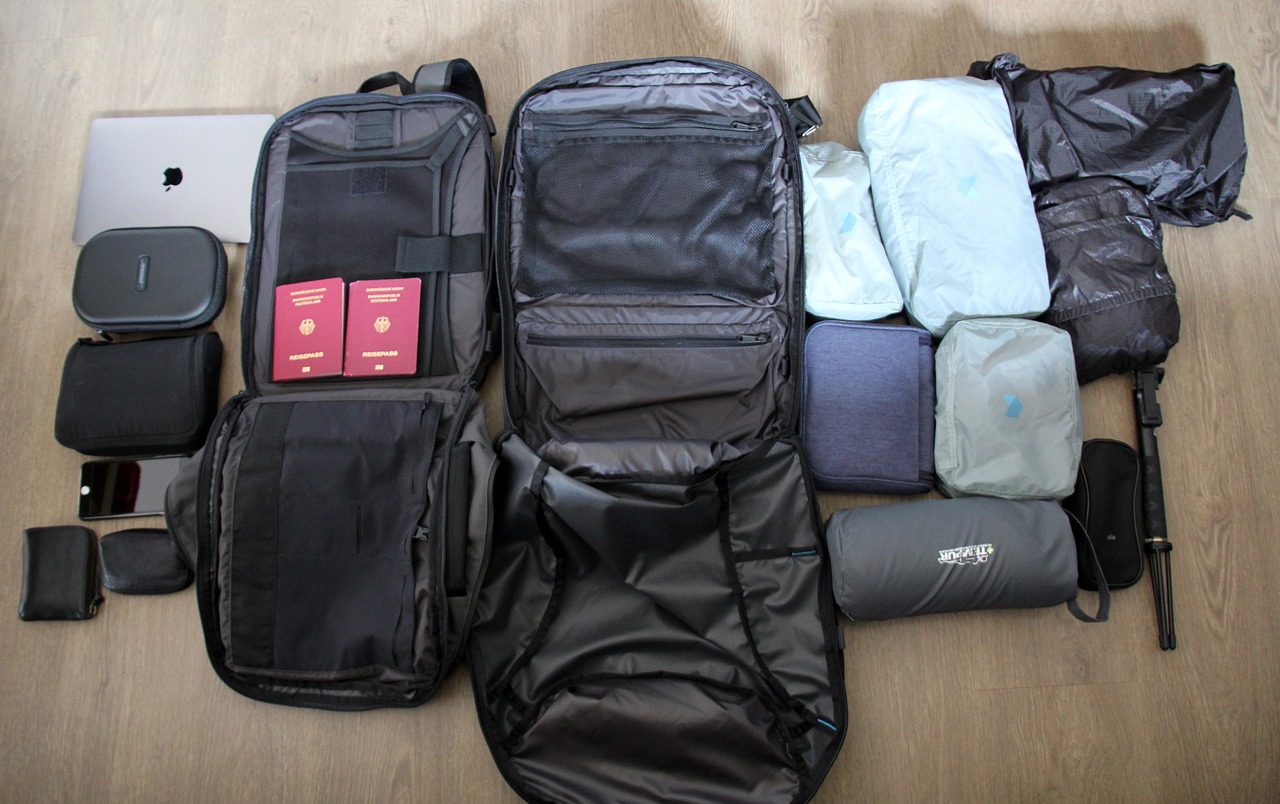
Lay out everything you plan to pack before placing items in your bag. This visual assessment helps identify unnecessary items and ensures nothing gets forgotten. Apply the “wear it three ways” rule—if you can’t style an item in at least three different outfits, reconsider whether it deserves precious carry-on space.
The Night-Before System
Pack the evening before your departure, not the morning of. This timing allows you to think clearly without time pressure and gives you opportunity to add forgotten items overnight. Place your packed carry-on by the door with your travel documents, keys, and phone charger nearby.
Do a final weight check to ensure your bag meets airline requirements. Many travelers discover their carefully packed bag exceeds limits only at the airport, forcing rushed repacking. A simple luggage scale at home prevents this stressful scenario.
Maintaining Organization During Your Trip ✨
Organization doesn’t end once you reach your destination. Maintaining your system throughout your trip ensures easy repacking and prevents the chaotic bag explosion that often occurs mid-journey. Develop habits that preserve your initial organization.
Upon arriving at your accommodation, remove only what you need rather than unpacking completely. Use hotel drawers or shelves for your packing cubes as complete units, maintaining their organization. Designate one cube or section for dirty laundry, keeping it separate from clean clothes.
Each evening, return items to their designated zones rather than tossing everything haphazardly into your bag. This five-minute ritual saves significant time when checking out and ensures you don’t leave items behind. Check drawers, bathroom counters, and under beds before departure—common places where items hide.
Space-Saving Hacks That Actually Work
Maximizing carry-on space involves creative solutions beyond basic folding. Stuff socks, underwear, and small items inside shoes to utilize otherwise wasted space. Roll belts and place them around the perimeter of your bag, creating structure while saving space.
Wear your bulkiest items during travel rather than packing them. Boots, heavy jackets, and thick sweaters take up significant space but wear comfortably during transit. Layer clothing at the airport and adjust once aboard the plane.
Utilize every pocket and compartment strategically. Sunglasses cases protect delicate items like jewelry or electronics accessories. Empty water bottles pack flat and can be filled after security. Multi-purpose items like sarongs serve as blankets, beach covers, or emergency bags.
Security and Safety Considerations 🔒
Organization contributes to travel security by keeping valuables visible and accessible. Never pack important items like passports, medications, or electronics in checked luggage where they’re vulnerable to loss or theft. Keep these essentials in your personal item that remains under the seat in front of you.
Use TSA-approved locks on your carry-on’s main compartments while leaving quick-access pockets unlocked for easy security screening. Distribute valuables throughout different compartments rather than concentrating them in one location. This strategy minimizes loss if one section is compromised.
Keep a photocopy of your passport and important documents separate from originals. Store copies in different bags or with traveling companions. This redundancy proves invaluable during emergencies requiring identification or document replacement.
The Post-Trip Optimization Process
After returning home, take fifteen minutes to evaluate your packing success. Note items you never used and remove them from future lists. Identify gaps where you needed something unavailable. This reflection continuously refines your personal template.
Unpack completely within 24 hours of returning to prevent the dreaded suitcase-by-the-door syndrome. Process laundry immediately and return travel-specific items to a designated storage area. Refill toiletry bottles and replace any depleted items so your kit remains ready for the next adventure.
Update your master packing list while memories remain fresh. Digital lists in note-taking apps or specialized travel apps allow easy editing and sharing with travel companions. Over time, this practice creates a highly personalized system requiring minimal mental energy for future trips.
Building Your Personal Packing Template Library
Experienced travelers maintain multiple templates for different trip types, seasons, and destinations. Create separate lists for weekend getaways, week-long vacations, business trips, and adventure travel. Include season-specific templates accounting for weather-appropriate clothing and gear.
Store templates digitally where they’re accessible from any device. Cloud-based systems ensure you can review your list while shopping for last-minute items or double-check forgotten essentials from the airport. Share successful templates with friends and family, and learn from their systems in return.
Your ultimate carry-on organization template evolves continuously, becoming more refined with each journey. The investment in developing this system pays dividends in reduced stress, saved time, and enhanced travel experiences. By implementing these strategies and templates, you’ll transform packing from a anxiety-inducing task into a confident, streamlined process that kickstarts your adventures on the right foot. Happy travels! 🌍